


Broken Key Extraction When You Need Access Fast

A key can break at the worst possible moment: outside your front door after work, at a storefront before opening, or in the ignition when you need to leave. Broken key extraction is usually a fixable problem, but the first few minutes matter. Pushing the broken piece farther into the lock or forcing a tool into the keyway can turn a straightforward service call into a damaged lock that needs replacement.
Take a breath and stop turning the key. If you are locked out, dealing with a business entrance, or unable to use your vehicle, help is available. The goal is to remove the fragment without damaging the lock cylinder, then make sure you have a working key and a secure way to get back inside.
Why Keys Break in Locks
Most keys do not snap without warning. Over time, the metal can wear down, bend slightly, or develop a weak spot near the shoulder where the key meets the head. A copied key may also have rough cuts or be made from softer metal, making it more likely to bind inside the lock.
The lock itself can be part of the issue. Dirt, corrosion, worn internal pins, misalignment, or a stiff door can put extra pressure on the key. Sacramento-area heat, dust, and everyday use can all affect exterior locks, especially on gates, older doors, mailboxes, and commercial entry doors that see constant traffic.
Sometimes the key breaks because the door is not aligned with the latch. If you have to lift, pull, or shoulder the door to turn the key, the lock may be under pressure. Replacing the key alone will not solve that underlying problem.
What to Do Immediately After a Key Breaks
First, leave the broken piece exactly where it is. Do not turn the lock, insert another key, or spray heavy oil into the cylinder. If any part of the key is sticking out, avoid grabbing it with pliers unless you can pull it straight out without twisting. Pliers often push the fragment deeper or scratch the keyway when there is very little metal to hold.
If the door is already open, keep it open if you can do so safely. That gives you time to address the problem without being locked out. For a business, secure the entrance with staff nearby or use another approved access point while arranging service.
If the key broke in a vehicle ignition, do not keep trying to start the car. Avoid using glue, magnets, screws, or improvised hooks. Modern vehicle ignitions and electronic keys can be especially sensitive, and a failed DIY attempt can create a more expensive repair.
A clear photo of the lock and the broken key can help a locksmith understand the situation before arrival. If you have another working key, set it aside rather than testing it repeatedly in the damaged lock.
Broken Key Extraction Without Damaging the Lock
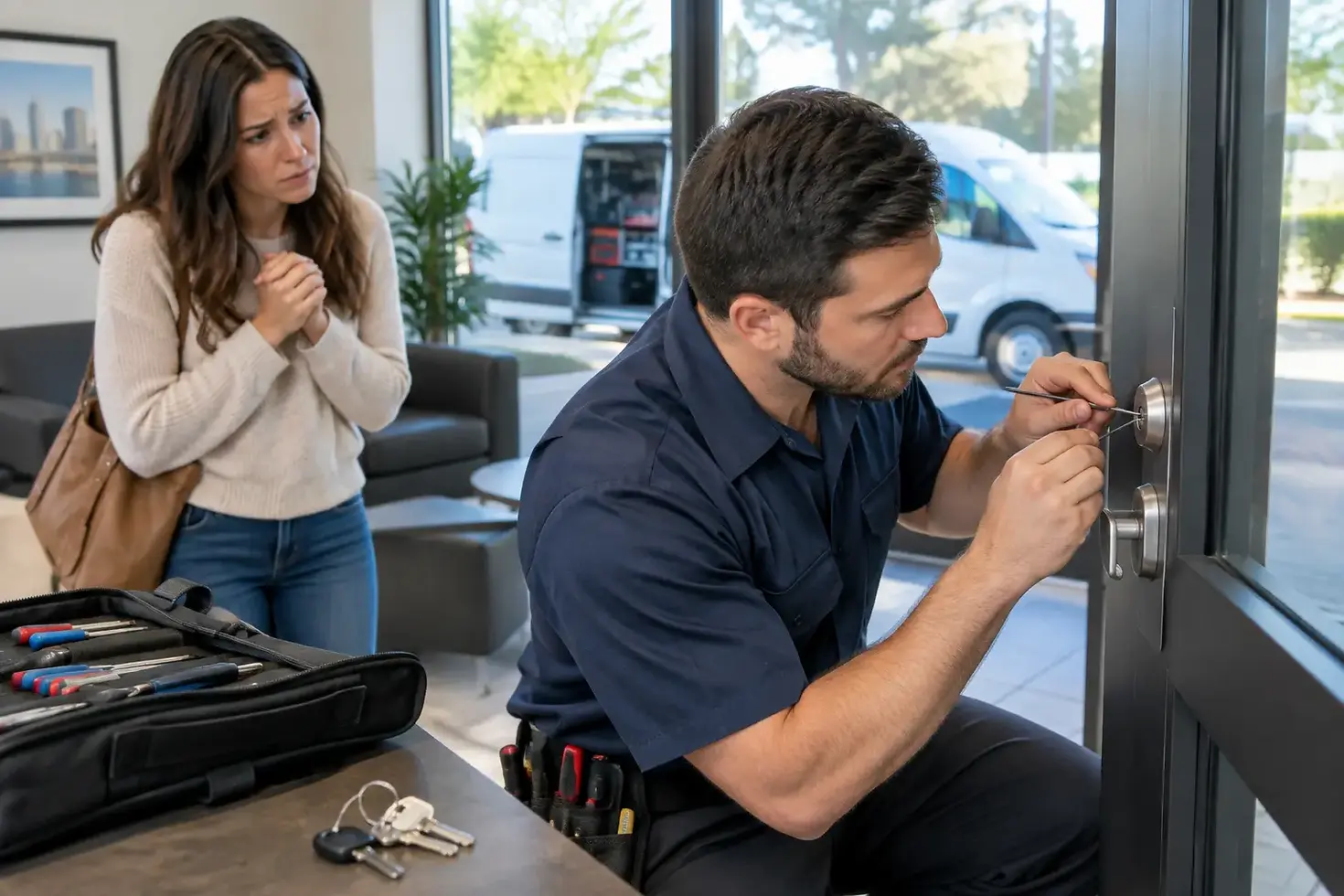
Professional broken key extraction is about control, not force. A locksmith inspects whether the fragment is near the face of the lock, how the key was positioned when it broke, and whether the cylinder is still aligned. Specialized extractors can grip or catch the broken blade while keeping the internal pins from being disturbed.
Once the piece is removed, the work is not automatically finished. The lock should be tested with a properly cut key to see whether it turns smoothly. A locksmith may find that the key broke because the cylinder is worn, the latch is binding, or the door needs adjustment. In those cases, extraction protects your immediate access, while repair, rekeying, or replacement helps prevent another failure.
For a house key, the best outcome is often removing the fragment, checking the lock, and making a new key from a reliable original or by code when appropriate. For rental properties and commercial spaces, a rekey may make more sense if keys have been lost, copied, or passed between tenants or employees.
Can You Remove a Broken Key Yourself?
It depends on how far the key is inside and whether the lock is in the correct position. If the key fragment is visibly protruding, the door is unlocked, and you can pull it straight out with steady fingers, you may be able to remove it without trouble. Stop immediately if it resists.
DIY extraction becomes risky when the fragment is flush with the lock face, the key broke while turned, or the lock is holding a closed door shut. Thin jigsaw blades, paper clips, tweezers, and adhesive products are common suggestions, but they can crowd the keyway, damage the pins, or leave more material inside the cylinder. Tweezers are particularly likely to push the key farther in because they need room to close around it.
The trade-off is simple: attempting a careful pull on an exposed piece may save a call, but forcing an embedded piece can lead to a lock repair or replacement. If access is urgent or the lock protects your home, business, or vehicle, calling a professional early is usually the safer and more affordable decision.
Do Not Use Glue or Force
Super glue is one of the most common mistakes after a key breaks. The idea is to glue the key head back onto the fragment and pull it out. In practice, adhesive can seep into the lock cylinder and bond internal parts together. What began as an extraction may become a full lock replacement.
Avoid these actions as well:
Do not hammer, drill, or pry at a residential or commercial lock.
Do not insert a second key behind the broken piece.
Do not flood the keyway with household oil or lubricant not designed for locks.
Do not keep twisting a stiff key before or after the break.
If the lock is part of a fire-rated commercial door, an apartment building entry, or a secure office, improper work can also affect door function and building security. This is not the place to take chances with a temporary fix.
When a Broken Key Means More Than Extraction
A broken key can reveal a larger security issue. If the lock sticks, spins freely, requires jiggling, or works only from one side of the door, the cylinder may be nearing the end of its useful life. A door that has shifted with age or weather can also place strain on the latch and key.
Property managers should pay close attention when a tenant reports repeated key difficulty. A quick inspection may prevent an after-hours lockout, a damaged entry door, or a frustrated tenant who cannot secure the unit. Small-business owners should do the same for rear exits, gate locks, storage rooms, and employee entrances. Those locks often receive heavy use and are easy to overlook until access fails.
For homeowners, consider whether every person with a key still needs one. If a key broke after a move, a roommate change, a contractor visit, or lost-key concern, rekeying may provide more peace of mind than simply making another copy.
Get Local Help When Access Cannot Wait
When you are locked out, standing outside a business, or unable to start your vehicle, a mobile locksmith can assess the lock on site and explain the next step before work begins. Ask for clear pricing, whether the lock can likely be preserved, and whether a replacement key, rekey, or lock repair may be needed after extraction.
Quick Pick Locksmith provides professional broken-key help for homeowners, drivers, property managers, and businesses throughout Sacramento and nearby communities. For urgent assistance, call 916-693-5613 or book service online at www.quickpicklocksmiths.com.
A broken key is stressful, but it does not have to become a broken lock. Stop using the keyway, protect the door or vehicle, and get the right help before a small fragment creates a larger access or security problem.


Comments