

How to Fix Loose Doorknob Problems Safely

A doorknob that spins, wiggles, sags, or pulls away from the door is more than an everyday annoyance. It can leave a bedroom, office, rental unit, or exterior door difficult to secure. Knowing how to fix loose doorknob hardware starts with identifying what is actually moving: the knob, the mounting plate, the latch, or the lock itself.
Most interior doorknob repairs take only a few minutes and require a screwdriver. Exterior and keyed locks deserve more care. Tightening the wrong screws or forcing a damaged lock can make the door harder to open and may create a security concern.
Why Doorknobs Become Loose
A doorknob works through several connected pieces. The knobs or levers turn a spindle, which operates a latch inside the edge of the door. Screws passing through the door hold the lockset together, while a strike plate on the frame receives the latch.
Daily use slowly loosens set screws and mounting screws. On busy household doors, commercial restroom doors, rental properties, and garage entry doors, that wear can add up quickly. Slamming the door, pulling on a knob while the latch is stuck, or using a heavy lever handle can speed up the problem.
Sometimes the visible hardware is loose but the lock still works normally. Other times, the knob turns without retracting the latch, the latch sticks, or the key becomes difficult to turn. Those symptoms point to a deeper issue than a simple loose screw.
Before You Start: Check What Type of Knob You Have
Look closely at both sides of the door before taking anything apart. A standard interior privacy knob usually has visible screws on one side of the round plate. A keyed entry knob may hide its screws beneath a decorative cover. Lever handles often use a small set screw on the underside of the handle.
Keep the door open while working whenever possible. This prevents an accidental lockout if the latch or lock body shifts during the repair. Have a Phillips-head screwdriver ready, along with a small flathead screwdriver or paper clip for hardware with a release slot. Avoid using a power drill for routine tightening, since it can strip screw heads or crack a decorative plate.
How to Fix a Loose Doorknob With Visible Screws
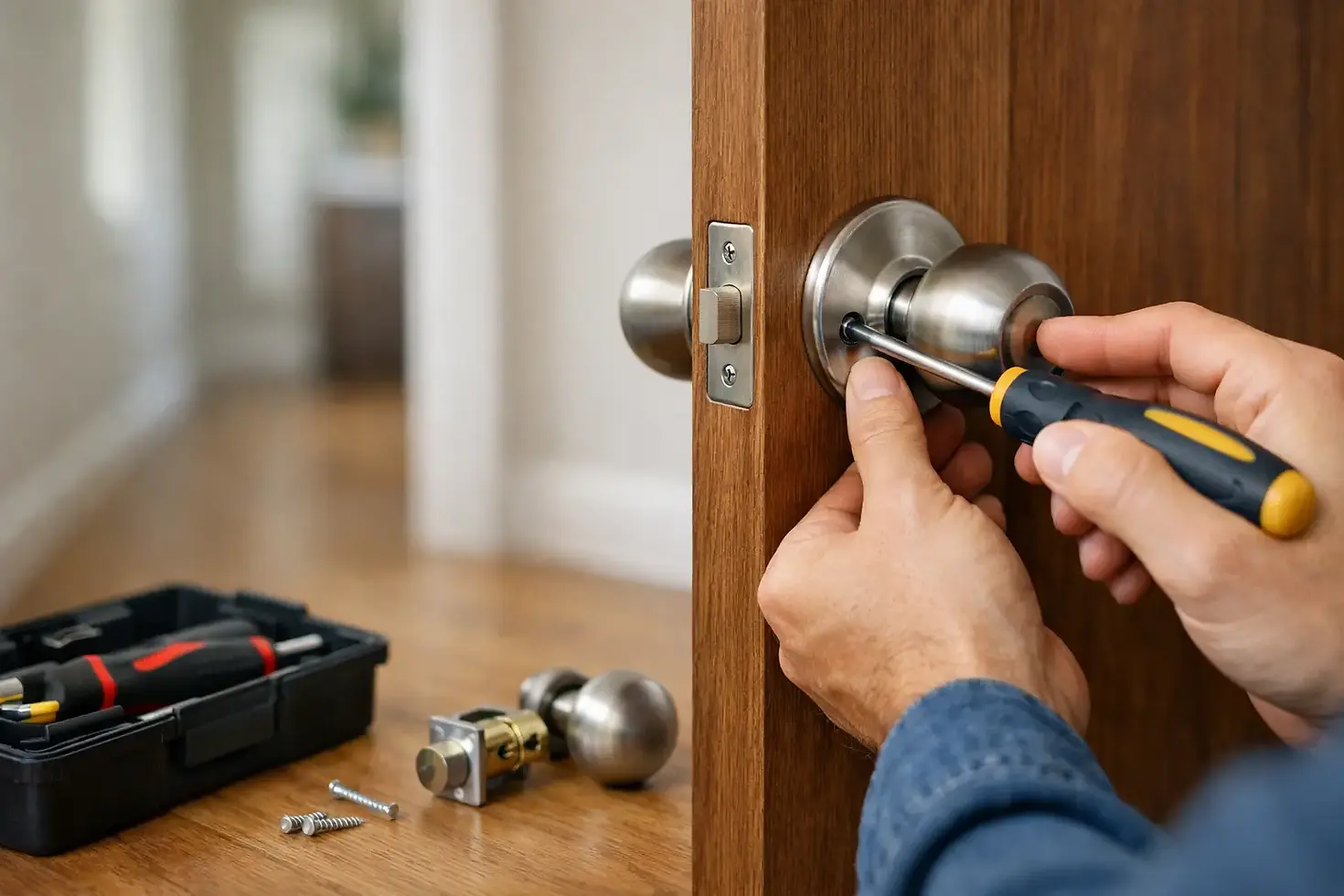
If you can see two screws on the interior plate of the lockset, the repair is usually straightforward. Hold the exterior knob in place with one hand and tighten each interior screw a little at a time. Alternate between the two screws so the lockset pulls together evenly.
Do not crank the screws down as hard as possible. Over-tightening can bind the internal mechanism, especially on older knob sets. Stop when the hardware sits firmly against the door and does not wobble.
Test the knob from both sides with the door open. Turn it several times and confirm that the latch retracts smoothly and springs back out fully. Then close the door and make sure the latch enters the strike plate without needing to push, lift, or pull the door.
If the Screws Keep Spinning
A screw that will not tighten may be stripped, too short, or no longer catching the internal posts. Remove it and inspect the threads. Replacing a damaged machine screw with one that matches the lockset is often enough.
If the posts inside the lockset are stripped or broken, replacement is typically more practical than trying to patch the old hardware. This is especially true for an exterior lock, where reliable operation matters more than squeezing a few extra months from a worn set.
How to Fix a Loose Doorknob With Hidden Screws
Many newer locksets hide the mounting screws for a cleaner appearance. Start by looking for a narrow slot or small hole along the neck of the knob or lever, often on the underside. This is the release mechanism.
Insert a small flathead screwdriver, pin, or straightened paper clip into the hole while gently pulling the knob or lever outward. You should feel a spring-loaded tab depress. Once the handle comes off, slide off the decorative trim plate. The mounting screws should be visible underneath.
Tighten the screws evenly, reinstall the trim, and push the knob or lever back onto the spindle until it clicks into place. Test it before closing the door. If the handle will not click back on securely, do not force it. The spindle may be misaligned, or the release tab may be worn.
Tightening a Loose Lever Handle
A loose lever is often caused by a tiny set screw rather than loose mounting screws. Look under the base of the lever where it meets the round plate. Many models use a small Allen screw.
Use the correctly sized Allen wrench and turn the screw clockwise until the lever no longer shifts on the spindle. A wrench that is too small can round out the set screw, turning a quick repair into a replacement job. If the screw is missing, take the handle or the old screw to a hardware store to find the correct replacement.
If the lever itself is firm but the entire base plate moves against the door, remove the lever and trim to reach the concealed mounting screws instead.
When the Problem Is the Latch, Not the Knob
A knob can feel loose because the latch is sticking or the door is out of alignment. With the door open, turn the knob and watch the latch bolt on the door edge. It should retract fully and return smoothly when you release the knob.
If it moves slowly, catches, or stays partially retracted, remove the two screws holding the latch faceplate to the door edge. Check for bent parts, loose screws, or signs of wear. A small amount of dry lock lubricant may help a clean but sticky latch. Avoid soaking the mechanism with household oil, which can attract dust and gum up the parts over time.
A latch that is bent, badly worn, or inconsistent should be replaced. For exterior doors, it is usually best to replace the latch with a compatible, quality component rather than relying on a temporary adjustment.
Check the Strike Plate and Door Alignment
If the knob works while the door is open but becomes difficult when the door is closed, examine the strike plate on the frame. Scrape marks around the opening show where the latch is hitting. Loose strike plate screws can also let the plate shift enough to interfere with latching.
Tighten the screws and test the door again. If the latch hits above or below the opening, the door may be sagging due to loose hinges, seasonal swelling, or frame movement. Tightening hinge screws can sometimes solve the issue. A door that requires force to latch should not be ignored, because repeated forcing puts unnecessary stress on the doorknob and lock.
When Not to DIY a Loose Doorknob Repair
Call a locksmith if the doorknob is on an exterior door and the key will not turn, the latch fails to retract consistently, or the deadbolt and knob no longer line up correctly. Those issues can affect both access and security. The same is true if the hardware is loose after a break-in attempt or if a commercial door has panic hardware, an access-control lock, or a fire-rated assembly.
Renters should also be cautious about replacing keyed locks without permission. A property manager may need matching keys, documentation, or a specific lock type. For homeowners, replacing a worn entry lock can be a good opportunity to rekey the door and make sure old keys no longer work.
For Sacramento-area homeowners, property managers, and business owners dealing with a damaged or unreliable lock, Quick Pick Locksmith can inspect the hardware, explain the repair options clearly, and help restore secure access. Call 916-693-5613 when the lock is sticking, failing, or no longer giving you confidence that the door is properly secured.
A firm doorknob should turn smoothly, retract the latch completely, and sit tight against the door without any wobble. If yours still feels unreliable after tightening the hardware, treat that as a sign to repair or replace it before a small inconvenience becomes a lockout or security problem.


Comments