

Rekeying Versus Replacement for Your Locks

A tenant moves out and one key is missing. You buy a home and have no idea who still has copies. Your office key disappears after a busy shift. In moments like these, the choice between rekeying versus replacement affects both your security and your budget. The right answer is not always a full lock change.
A professional locksmith can inspect the lock, explain what is still working, and recommend the practical option. Sometimes a rekey is all you need. Other times, keeping an old, damaged, or low-security lock is the more expensive decision in the long run.
What Rekeying Actually Changes
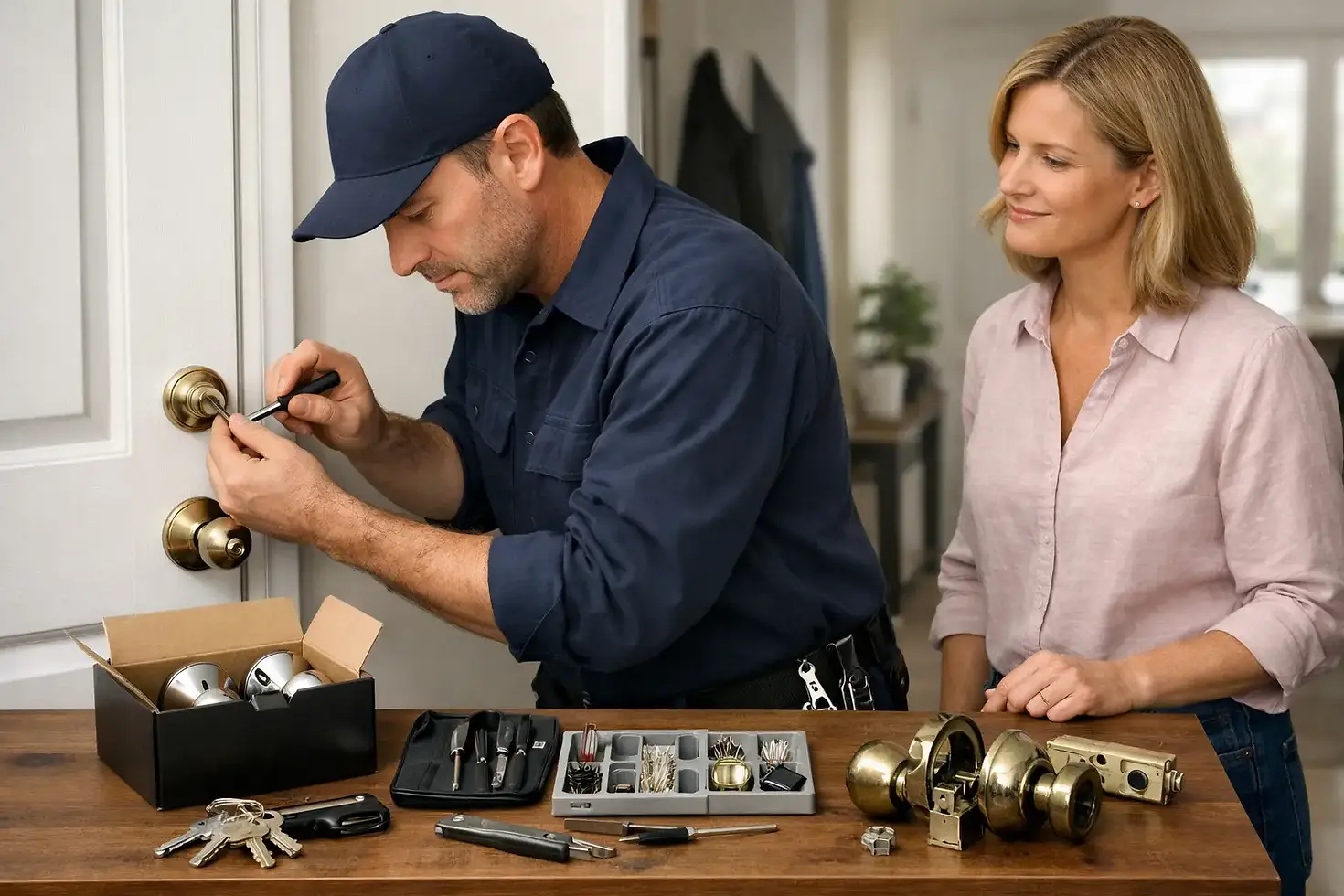
Rekeying changes the internal pins or components inside an existing lock cylinder so the current key no longer works. The outside hardware stays in place, but a new key operates the lock.
Think of it as changing who has access without replacing the entire lock. This is often a smart choice when the lock is in good condition, the door hardware is secure, and the main concern is that someone else may have a key.
For homeowners, rekeying is especially common right after a move. Even if the seller hands over several keys, there is no reliable way to know whether a neighbor, contractor, former roommate, dog walker, or previous occupant has another copy. Rekeying gives you control of access from day one.
Property managers also rely on rekeying during tenant turnover. It is usually faster and more cost-effective than replacing every lock between residents, provided the locks are in sound working order. A locksmith may also be able to key multiple compatible doors alike, allowing one key to open the front door, side door, garage entry, or office suite.
When Rekeying Is the Better Choice
Rekeying is generally the right fit when the issue is access control rather than failed hardware. If you have lost a key, experienced a personnel change, moved into a property, or want to stop old keys from working, rekeying can restore peace of mind without unnecessary replacement.
It also makes sense when you like your existing hardware. Maybe the handles match your home, the locks are relatively new, or your business uses a compatible key system. There is no need to discard quality hardware simply because you need new keys.
A rekey may be a good option after a lockout, too. If your keys were stolen with identifying information, such as an address in a wallet or vehicle registration, rekeying is a sensible security step once you regain entry. The concern is no longer just getting inside. It is making sure the missing key cannot be used later.
Rekeying has limits. It does not repair a bent bolt, a worn-out latch, a loose deadbolt, a damaged strike plate, or a door that no longer lines up with the frame. It also does not turn a basic lock into a high-security lock. The lock will still provide the same general level of protection it had before.
When Lock Replacement Makes More Sense
Replacement is the better call when the lock itself has a problem, has suffered damage, or no longer meets your security needs. A key that sticks, a deadbolt that takes force to turn, a lock that spins loosely, or hardware with visible corrosion deserves attention. Those problems can lead to a lockout, a broken key, or a door that will not secure properly.
Replace a lock after an attempted break-in if the cylinder, bolt, door frame, or strike plate has been compromised. Even if the lock still turns, internal damage may not be obvious. A locksmith can check whether the door closes securely and whether the deadbolt fully enters a reinforced strike plate.
Replacement is also appropriate when you are upgrading security. A homeowner may want to replace an older knob lock with a quality deadbolt, add a smart lock for managed access, or install hardware that better fits the door and frame. Small-business owners may need commercial-grade levers, restricted keyways, panic hardware, or a master key system that matches how their staff actually uses the building.
If your locks are outdated or from different manufacturers, replacing them can simplify daily access. A coordinated set of compatible locks can often be keyed alike, reducing the number of keys you carry while keeping outside doors properly secured.
Rekeying Versus Replacement: Cost and Value
For an existing lock in good condition, rekeying is usually less expensive than replacement because it uses the hardware already on the door. It can be an efficient choice for a Sacramento rental property with several units or a home with multiple exterior doors.
Replacement costs more because it includes new hardware and installation. Yet lower upfront cost should not be the only factor. Rekeying a lock that is already failing may only delay a necessary repair. Replacing a damaged deadbolt before it fails can prevent an inconvenient lockout and provide a stronger, more reliable result.
The most useful question is not, “Which option is cheapest?” It is, “What problem am I solving?” If the concern is old keys, rekeying is often the efficient answer. If the concern is a weak, broken, outdated, or compromised lock, replacement is usually the safer investment.
Transparent pricing matters here. Before work begins, ask what service is recommended, why it is recommended, and whether the existing hardware can be safely rekeyed. You should understand the difference between the service call, labor, new hardware, and any additional keys needed.
A Quick Way to Decide
Start with the condition of the lock. If it operates smoothly, latches correctly, and provides the level of security you need, rekeying may be enough. If it is damaged, unreliable, visibly worn, or too basic for the property, replacement deserves serious consideration.
Next, consider what changed. A move, tenant turnover, employee departure, or missing key points toward rekeying. A break-in, a malfunction, a door hardware upgrade, or a desire for smart access points toward replacement.
Finally, look at the bigger system. Your door is only as secure as its lock, frame, hinges, and strike plate. A new deadbolt will not solve a weak frame, and a rekey will not fix a door that has shifted out of alignment. A professional inspection helps identify the actual issue instead of treating only the symptom.
Situations That Need Prompt Action
Do not wait if you believe an unauthorized person may have access to your home, rental, or business. Rekey or replace the affected locks as soon as possible, especially after a stolen key, eviction, employee termination, lost master key, or relationship change involving shared access.
Act quickly after a break-in attempt or forced entry. Secure the property first, then have the lock, frame, and strike hardware evaluated. If a key broke in the lock or the hardware has become difficult to operate, arranging service before it fails completely can save you from a late-night emergency.
For Sacramento-area homeowners, renters, property managers, and business owners, Quick Pick Locksmith can assess the condition of your locks and provide a clear recommendation without pushing replacement when a rekey will do. If access or security is uncertain, call 916-693-5613 or book service online. A working lock should feel routine, not like something you have to worry about every time you leave the property.


Comments