

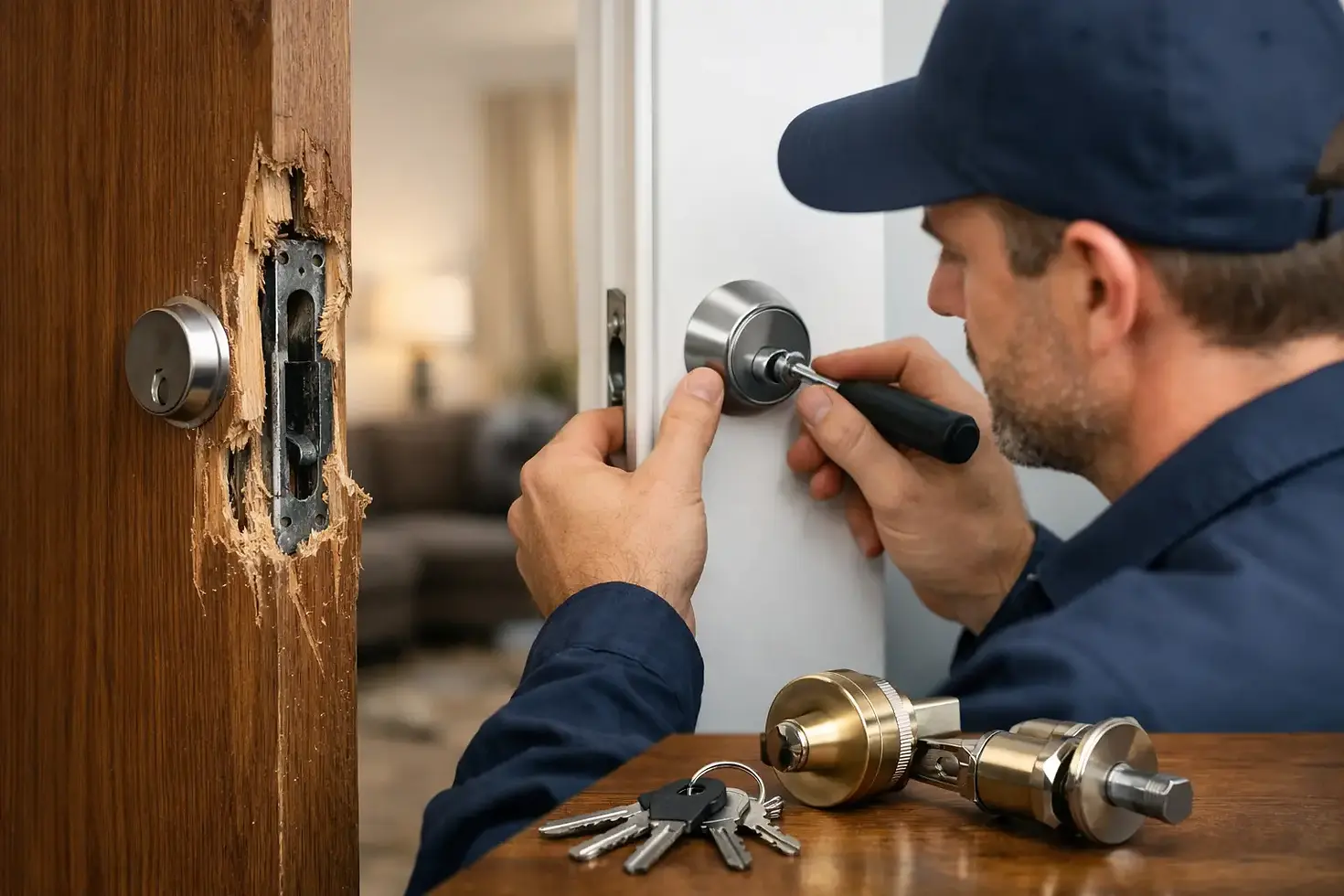
Replace Locks After a Break-In? What to Do?

A broken door frame, a damaged deadbolt, or an open window can leave you feeling unsettled long after police have left. Deciding whether to replace locks after break in is one of the first practical security decisions you will face. The right answer depends on how entry was gained, whether keys may be missing, and whether the existing hardware can still protect your home or business.
Do not wait for the stress to fade before addressing it. A break-in can expose weak locks, worn strike plates, poor door alignment, or a key-control issue that was already there. Securing the property quickly helps you regain control and makes it easier to sleep, reopen your business, or safely return tenants to a rental unit.
First, Protect the Scene and Your Safety
If the break-in may have just occurred, get to a safe location and call 911. Do not enter a home or business if you think someone could still be inside. Once law enforcement has cleared the property, avoid moving damaged locks, windows, or doors until officers have completed the work they need to do.
Take clear photos of the damaged entry points, including the lock, door edge, frame, strike plate, windows, and any items left behind. These photos can help with a police report and may be useful for an insurance claim. Keep receipts for emergency boarding, repairs, and locksmith work as well.
After the scene is released, the priority changes from documentation to security. If a door will not latch, glass is broken near a lock, or a lock cylinder has been forced, arrange immediate temporary protection and lock service. A door that looks closed but does not fully secure is not a safe door.
Should You Replace Locks After a Break-In?
In many cases, yes. You should replace locks after a break-in when the lock, door, or frame was damaged; when keys were stolen; or when you cannot be certain who may have access to a key. Forced entry can damage internal lock components even when the exterior appears mostly intact. A lock may turn today but fail to resist another attack tomorrow.
Replacement is also the sensible choice when the hardware was already outdated or low quality. Basic knob locks alone are not enough protection for most exterior doors. A properly installed deadbolt or commercial-grade lock, paired with a reinforced strike plate and long mounting screws secured into the framing, provides a much stronger setup.
That said, a full lock replacement is not always required. If the lock was not damaged and the concern is simply that a key was lost or stolen, rekeying may restore control at a lower cost. A professional locksmith can inspect the hardware and explain whether rekeying, repair, replacement, or a security upgrade is the most practical option.
Rekeying vs. Replacing: Know the Difference
Rekeying changes the internal pins inside an existing lock cylinder so old keys no longer work. You receive a new key, while the outer lock hardware stays in place. It is often a good option when the lock is in sound condition but a burglar took keys, a key ring is missing, or a former occupant may still have a copy.
Replacing a lock means installing new hardware. This is generally necessary when the lock is bent, drilled, pried, malfunctioning, or too weak for the door it protects. Replacement may also be worthwhile if you want to move from separate keys to one key for multiple doors, add a keypad deadbolt, or upgrade the appearance and function of the entry.
The best choice is not always the least expensive one. Rekeying a lock that has been compromised physically can create a false sense of security. On the other hand, replacing a perfectly functional lock when only key control is at issue may add unnecessary cost. An on-site inspection gives you a clear answer.
Check More Than the Lock
Burglars do not always defeat the lock itself. Sometimes the weak point is the door frame, the strike plate, the hinges, a sliding door, or a window with an easy-to-reach latch. Replacing a deadbolt without addressing the point of failure can leave the same vulnerability in place.
Ask for the entry point to be checked closely. A wooden frame that has split around the latch may need repair before a new lock can perform correctly. A loose strike plate should be reinforced, and exterior hinge screws should be inspected if the hinges are accessible from outside. For sliding glass doors, the lock may need attention along with a properly fitted security bar or track repair.
For a business, check every door that uses the same keyway or shares keys with the affected entry. If office keys, master keys, storage-room keys, or access cards were taken, the issue may extend beyond one door. Property managers should also consider whether a maintenance key, vendor key, or old tenant key could create additional exposure.
Improve Security Without Overcomplicating It
After a break-in, it is natural to want the strongest option available immediately. Stronger hardware can help, but the most useful plan is one that fits the property and will be used consistently.
For many homes, that means a quality deadbolt on every exterior door, reinforced strike hardware, working window locks, and exterior lighting near entrances. A peephole, door viewer, or video doorbell can also help residents identify visitors without opening the door. If you choose a smart lock, make sure every authorized user has their own code and remove codes promptly when circumstances change.
Small businesses may need a different approach. Restricted key systems, commercial levers, panic hardware, door closers, keypad access, and separate keys for sensitive rooms can make sense depending on the building. The goal is to limit access without slowing down staff or creating a difficult routine at opening and closing time.
Renters should contact their landlord or property manager right away, especially if a door, frame, or building-owned lock was damaged. California rental responsibilities can vary by situation and lease terms, but tenants should not leave a damaged entry unsecured while waiting for a decision. Document the condition, communicate in writing, and ask when the lock will be rekeyed or replaced.
Do Not Forget Key Control
A new lock is only as secure as the keys and codes connected to it. After a break-in, account for every key that may have been taken, including spare house keys in a purse, keys stored in a vehicle, mailbox keys, garage remotes, office keys, and keys labeled with an address.
Avoid hiding a replacement key outside in the usual places. If a trusted neighbor or family member needs access, give them a controlled spare or use a keypad code that can be changed later. For businesses and rental properties, keep a simple record of who has keys and collect them when employees, vendors, or tenants move on.
If a vehicle key ring was stolen, consider the risk to your home or business if the thief can connect the registration, address, and keys. A locksmith can help with vehicle key replacement and programming, but the home or commercial locks may need immediate attention too.
Get Fast Help When the Door Will Not Secure
A damaged lock is not a problem to put off until next week. If you are in Sacramento or a nearby community and an entry door will not lock, a mobile locksmith can assess the damage, secure the opening, and provide clear options before work begins. Quick Pick Locksmith offers responsive help for lock repair, lock replacement, rekeying, and security upgrades. Call 916-693-5613 when you need a local professional to help restore control of your property.
You do not have to turn your home or business into a fortress to feel safe again. Start with the door that was breached, fix what failed, control the keys, and make the next entry attempt far more difficult.


Comments